Famous Physicists

The field of physics deals with the immutable laws that govern the entire universe. Some of the greatest names in this discipline include Isaac Newton, Albert Einstein, and Niels Bohr, just to name a few. Their contributions along with the important discoveries of others have given us a better understanding of our world. Here is a list that includes some of the most famous physicists throughout history in order of the notoriety of their work.

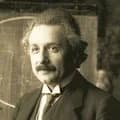
Albert Einstein

Albert Einstein

1879-1955

Known for: Advancing the Theory of Relativity

At the age of seventeeen, Albert Einstein enrolled to complete and receive his teaching diploma in the field of physics and mathematics at the Swiss Federal Institute of Technology in Zurich, Switzerland. He debated with Niels Bohr, the other founder of quantum mechanics. In 1905, Einstein published On the Electrodynamics of Moving Bodies, this contained his theory on relativity. In 1921, Albert Einstein was a recipient of the Nobel Prize in the field of Physics.
Niels Bohr

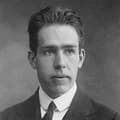
Niels Bohr

1885-1962

Known for: Contributions to quantum theory, nuclear reactions and nuclear fission

Niels Henrik David Bohr, a native of Copenhagen, Denmark and his contribution to the world of physics rests on his study and explanation of the atomic structure. In addition, he helped in the understanding of quantum mechanics and in so doing founded the Institute of Theoretical Physics located at the University of Copenhagen, the institute has been renamed to the Niels Bohr Institute.

Stephen Hawking

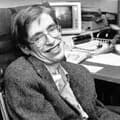
Stephen Hawking

1942-2018

Known for: Explaining Black holes and Advances on the General Theory of Relativity and Quantum mechanics

He is known for his scientific works with Roger Penrose, for which they provided a theory for the basis of general relativity, this is known as the gravitational singularities theorem. In 1978, Hawking received the Albert Einstein Award, given to those who excelled in natural sciences, more specifically, theoretical physics.

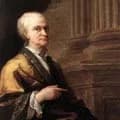
Isaac Newton

Isaac Newton

1642-1727

Known for: Explaining the theories of gravity and mechanics

Isaac Newton is known for his contribution to world of science. It was Newton who identified the concept of gravity and the theory of mechanics. He excelled in the fields of alchemy, astronomy, Christian theology, economics, mathematics, and of course, physics.

Nikola Tesla

Nikola Tesla

1856-1943

Known for: Created the first Alternating Current system

Nikola Tesla is known for his contribution in the development and use of alternating current (AC) system. He worked briefly with Thomas Edison and George Westinghouse. His experiments on high voltage electricity gained him further notoriety.

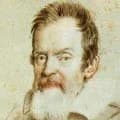
Galileo Galilei

Galileo Galilei

1564-1642

Known for: Providing a mathematical analysis of the relationship between astronomy and physics

Galileo is known for his experiments and theories in the field of bodies in motion. His work in astronomy, mathematics and physics and the combination of these sciences became instrumental in the study and understanding of the universe beyond us.

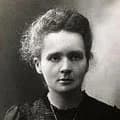
Marie Curie

Marie Curie

1867-1934

Known for: Discovered radioactivity nature of thorium and the discovery of polonium and radium

She is known for introducing techniques in the field of radioactivity for isolating isotopes. Marie was instrumental in the discovery of the elements known as polonium and radium.

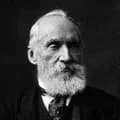
(Lord) Kelvin

(Lord) Kelvin

1824-1907

Known for: Advancement of the 1st and 2nd laws of thermodynamics. Developed absolute thermometric scale

He is known for formulating the 1st and 2nd laws of thermodynamics. The measure of absolute temperatures has been named after him. It was he who coined the term “kinetic energy”.

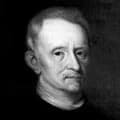
Robert Hooke

Robert Hooke

1635-1703

Known for: Explaining Hooke’s Law of Elasticity

Robert Hooke is known for the physics principle that is the law of elasticity, which is better known as Hooke’s Law. He constructed one of the earliest reflecting telescopes.

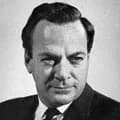
Richard Feynman

Richard Feynman

1918-1988

Known for: Work on Path integral formulation on quantum mechanics, particle physics, theory of quantum electrodynamics and, superfluidity

Richard Feynman is known for his efforts in the integral formulation’s path in quantum mechanics along with advancing the theory of quantum electrodynamics and superfluidity. He is also remembered for his involvement with the Manhattan project.

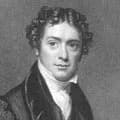
Michael Faraday

Michael Faraday

1791-1867

Known for: Discovery of electromagnetic induction and came up with the idea for first electrical transformer

Michael Faraday is known for his work on chemistry and physics, specifically In physics, he worked heavily in the field of magnetism and electricity. Many scientific concepts have been named after him; Faraday’s law of induction, Faraday’s law of electrolysis, and so on. He was successful in converting gases into liquid form.

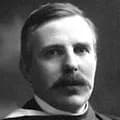
Ernest Rutherford

Ernest Rutherford

1871-1937

Known for: Supporting the Theory on the existence of an atomic nucleus

Ernest Rutherford is known for his work in the field of nuclear physics. He worked with J.J. Thomson that led to the eventual discovery of the electron. He also explained the nature of radioactivity, in which he discovered two types of x-rays, alpha and beta rays.

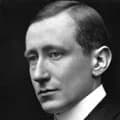
Marconi

Marconi

1874-1937

Known for: His work on the Wireless Telegraphy

Italian inventor Guglielmo Marconi is known for his pioneering work on the radio telegraph system, which eventually led to him being recognized as the inventor of the radio. He received the Nobel Prize in 1909 along with Karl Braun for their contribution to the world of wireless innovations.

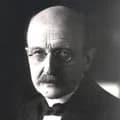
Max Planck

Max Planck

1858-1947

Known for: The formulation of the quantum theory

German national Max Planck is known for bringing to the world the concept or theory of quantum physics. His work in the field of physics expanded the understanding of time and space.

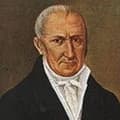
Alessandro Volta

Alessandro Volta

1745-1827

Known for: Inventing the first electric battery

Alessandro Volta is known for and credited for the discovery of methane and making the earliest known form of the battery in the 18th century. The “battery” was made of copper and zinc, with sulfuric acid used to complete the circuit.

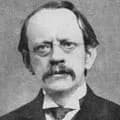
J.J. Thomson

J.J. Thomson

1856-1940

Known for: Showing the existence of the electron

Joseph John (J.J.) Thomson is known for the identification of the electron and isotopes. During one of his experiments, Thomson was able to identify a negative charged particle which became known as the electron.

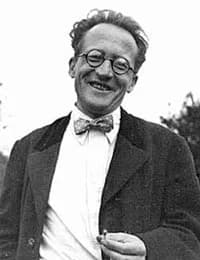
Erwin Schrodinger

Erwin Schrodinger

1887-1961

Known for: Extensive Advancements on Quantum mechanics and the Schrodinger equation.

Erwin Schrodinger is known for his contribution to the world of physics in which he explains what is known as wave mechanics, it became known as the Schrodinger equation. He also provided answers for the diatomic molecule, the quantum harmonic oscillator, and the rigid rotor.

James Clerk Maxwell

James Clerk Maxwell

1831-1879

Known for: Work on the Theory of Electromagnetism and the Kinetic theory of gases

James Clerk Maxwell is known for his Theory of Electromagnetism which was published in a paper he wrote, A Dynamical Theory of the Electromagnetic Field in 1865. He demonstrated that the electromagnetic field is occurs in electricity, light, and magnetism. In collaboration with another scientist Ludwig Boltzmann, Maxwell explained the theory of kinetic gases, also known as the “Maxwell distribution”.

Werner Heisenberg

Werner Heisenberg

1901-1976

Known for: Work on Quantum Mechanics and the Uncertainty Principle

Werner Karl Heisenberg is known for the matrix formulation applied in quantum mechanics. The Heisenberg principle, or the “uncertainty principle” in quantum mechanics, became important to the field of physics in explaining inequalities of results from physical properties.

James Chadwick

James Chadwick

1891-1974

Known for: Discovery of the neutron

Sir James Chadwick is known for the discovery and identification of the neutron. Working with Hans Geiger, Chadwick studied beta radiation in which he was able to demonstrate the presence of a continuous electromagnetic spectrum. He was a participant on the now famous Manhattan project.